
Setting Eyelets & Grommets – Easy Guide

Setting eyelets is an easy way to create strong, reinforced holes in fabric and leather. Eyelets and grommets are commonly used for drawstrings, lacing, belts, bags, curtains, corsets, and decorative details. Once installed, they prevent fabric from fraying and provide a durable opening for cords, ribbons, and straps. In this tutorial, you’ll learn how to set eyelets step by step, the tools you need, the difference between eyelets and grommets, and tips for achieving a professional finish on both fabric and leather projects.


How to Set Eyelets (Quick Guide)
Eyelets are installed by punching a hole in fabric or leather, inserting the eyelet through the hole, placing the washer on the back, and securing the pieces together with a setting tool.
- Punch a hole in the leather or fabric the same size as the eyelet hole.
- Insert the eyelet in the hole.
- Place the washer on the back and use your hand or mechanical machine to set the eyelet.
What are Eyelets?
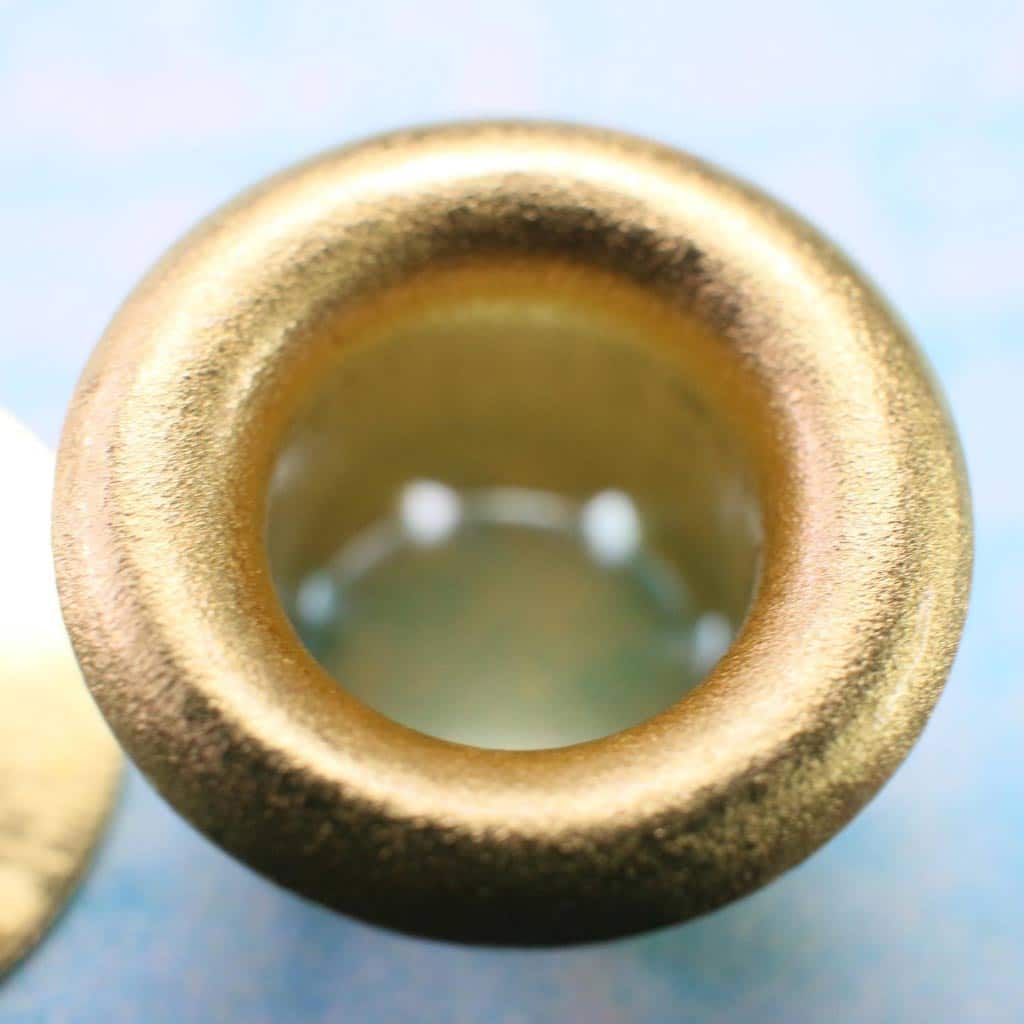
Eyelets are metal rings used for leather and fabric sewing. They are strong and durable and come in many different finishes. Most common are gold, brass, and silver, but some may have colored enamel on top for a pop of color. Eyelets come in different sizes both in their diameter and also the length of the prong. Longer eyelets are designed to be inserted into thicker fabrics and leathers.
The biggest advantage of setting eyelets is that they stop the edges of a hole from fraying and can be used to thread cords, laces, and the tongues of buckles. They can also be purely decorative, giving an edgy feel to your bags and clothing. Large eyelets can be used on the tops of curtains for the rod to thread through.
If you are learning garment fasteners and closures, see my complete guide to clothing fastenings to compare eyelets, grommets, snaps, buttons, zippers, and hooks.
What Are Eyelets Used For?
Eyelets are commonly used for:
- Drawstring bags
- Hoodies and sweatpants
- Corsets and lace-up garments
- Leather belts
- Handbags and purses
- Curtains
- Decorative embellishments
- Shoe laces and boots
Their main purpose is to reinforce holes and prevent fabric or leather from fraying.
How to Set Eyelets (Step by Step)
Supplies
For setting eyelets, you will need:
- Eyelets – These come in 2 parts: the top eyelet and a ring for the bottom, which is called a washer. Eyelets can be purchased in kits from fabric stores or from leather suppliers. For fabric eyelets, look for brands Birch, Hemline, and Dritz.
- Setting Tools – This normally comes in the packet with the eyelets, but you can also purchase these separately from leather suppliers and haberdasheries. See step 3 for more detail on setting tools.
- Hole Punch or Scissors – There are 2 main types of hole punches for eyelets. The first looks a little like a pair of pliers. They typically rotate so you can choose the size of the hole you wish to punch. The second type is a metal, long barrel punch with a sharp hole at the end. You use a hammer to hit down on the top, and the bottom will cut through and make a hole.
- Cutting mat to put on your table to protect it from marks. A food-cutting board works well.

Step 1 – Punch a Hole
Using a leather or fabric hole punch, put a hole where you want the eyelet to be inserted. The hole should be slightly smaller than the inside of the eyelet. If the hole is larger, your eyelet will not last and may fall out.

While you can use a pair of scissors for setting eyelets in fabric, hole punches are much cleaner and less likely to result in frayed fabric. For fabric that frays, use some fray stop solution to make the eyelet last longer.
If your only option is to use scissors to make the hole, start by cutting poking a hole through with the end of a small sharp pair, and then carefully cut the hole a little bigger. Remember not to cut it larger than the diameter of the prong.

Step 2 – Insert the Eyelet
Insert the top of the eyelet into the hole. This is the larger piece. Keep in mind that the nice side of the eyelet with the smooth ring should be on top. This is what you will see in the finished product.
Step 3 – Setting the Washer
Flip your item over and put the washer over the eyelet prong at the back.

Now use your setting eyelets tool to join the top to the washer. The setting tool will cause the end of the front prong to curl over the back ring and will keep it nice and secure.

Here you can see the front and back of the eyelet.
❤️ PRO TIP: I think it is worth mentioning that the eyelets I used in this tutorial were cheap, fabric-grade ones. See how the back of the eyelet splits as it curls over. If you are using more expensive eyelets designed for leather and a commercial setting tool, the ring at the back is smooth and unsplit. I thought this was worth mentioning in case you plan to sell leather goods at a market or online. Leather is quite expensive, so you want a nice finish.

Eyelets vs Grommets
Eyelets and grommets are both metal rings used to reinforce holes in fabric and leather. The terms are often used interchangeably, but eyelets are usually smaller and commonly found on clothing, bags, and craft projects. Grommets are generally larger and are frequently used on curtains, tarpaulins, sails, and heavy-duty applications.
| Feature | Eyelets | Grommets |
|---|---|---|
| Size | Smaller | Larger |
| Common Uses | Clothing, bags, corsets | Curtains, tarps, outdoor fabrics |
| Strength | Medium duty | Heavy duty |
| Installation | Setting tool | Setting tool |
Setting Tools for Eyelets
There are 3 main types of tools for setting eyelets. The one thing they all have in common is that the top and bottom washer of the eyelet will be squashed together.

- Eyelet Pliers – Designed for home use, they squeeze together. You’ll need strong hands! Ensure the top and bottom of the pliers are matched correctly and squeeze firmly.
- Commercial Eyelet Presses – You can swap out the setting plates to use these machines to set different-sized eyelets, snaps, and studs. These are heavy machines that are usually bolted to a solid table. Put the eyelet under the machine wrong side up and pull down hard on the lever.
- Home Eyelet Setting Tools (2 separate parts). These setting tools often come in kits with eyelets and are used with a hammer. One tool will go on the bottom and the other on top. You may need to hit it a few times. This is why you need a mat underneath and a solid surface. I often hit the eyelets on the floor with a cutting mat underneath. This is the tool I used in the photo below.
Common Mistakes and Tips When Setting Eyelets
| Mistake | Tip |
| Making the hole too large | Punch a hole slightly smaller than the eyelet barrel. |
| Choosing the wrong eyelet length | Match the eyelet depth to the fabric thickness. |
| Skipping interfacing on lightweight fabric | Reinforce delicate fabrics before setting eyelets. |
| Using poor-quality eyelets | Invest in quality eyelets for leather goods and bags. |
| Not setting the eyelet firmly | Ensure the washer is fully secured to prevent loosening. |
Setting Eyelets in Fabric vs Leather
Fabric eyelets are commonly used for drawstrings, garments, and bags. Lightweight fabrics may need interfacing behind the eyelet area to prevent tearing.
Leather eyelets require a clean punched hole and often benefit from higher-quality eyelets and professional setting tools. Heavy-duty eyelets are recommended for belts, bags, and leather accessories.
Eyelets and Grommets FAQs
Eyelets are generally smaller and used for clothing and craft projects, while grommets are larger and designed for heavier applications such as curtains and outdoor fabrics.
Yes. Most eyelets require a washer on the back to secure the eyelet and prevent it from pulling out of the fabric.
Some eyelets can be installed using the setting tools included in kits, but a proper setting tool produces a more secure and professional result.
Use the correct eyelet size for the fabric thickness and reinforce lightweight fabrics with interfacing before installation.
Yes. Eyelets are commonly used in leather bags, belts, wallets, and clothing. Choose eyelets designed for the thickness of your leather.
Pin for Later

Setting Eyelets – In Conclusion
Learning how to set eyelets is a useful skill for sewing, leatherwork, and craft projects. Eyelets strengthen holes, prevent fraying, and create professional-looking openings for cords, laces, straps, and decorative details. Whether you are working with fabric or leather, choosing the correct eyelet size and using the proper setting tools will ensure durable, long-lasting results.

Setting Eyelets and Grommets
Difficulty
Tools
- Eyelets
Materials
- Fabric
Instructions
- Reinforce your fabric if necessary. Punch a hole slightly smaller than the eyelet using a leather or fabric hole punch.

- On the right side of the fabric, Insert the top, larger part of the eyelet down into the hole. Place the ring on the eyelet post at the back of the fabric.
- Use your setting tool to set the eyelet. If this is a home setting tool you will use a hammer to hit down on the top of the tool. For pliers you will squeeze the handles tightly together.
- Your eyelet is all done and ready to use.


More Articles on Fastenings
- Clothes Fastenings Guide for Sewing
- TYPES OF BUTTONS | 13 main types you will use
- Alternatives to Buttons | 5 Easiest Methods
- How to Fix a ZIPPER – Problems Solved
- How to Make FABRIC BUTTONS – Kit and No Kit
- How to Sew an Invisible Zipper – Easy Step by Step
- Hand Sewn Buttonhole – Easy Way To Do It
- How to Sew a Buttonhole | Automatic & Manual
- How to Sew a Button – BEGINNERS Guide
- Hook and Eye Sewing – TUTORIAL for Beginners
- How to Sew a Button on a Shirt | For Beginners
- How to Sew a Zipper – Easiest Way for Beginners
- How to Cover Zipper Ends – Great for Bags & Purses
- How to Sew On Snaps (Press Studs) for Beginners
- How to Sew an Exposed Zipper – 2 Easy Ways
- How to Shorten a Zipper | BEST Method for Plastic & Metal
- BUTTON SIZES | With Button Sizes Chart
- How to Use KAM Snaps Tutorial {Plastic Snaps}
- TYPES OF ZIPPER – Types, Sizes and Measuring Zips
- SEWING VELCRO | How to Sew Velcro the Right Way


Author - Luisa Clare
Luisa Clare is the founder of Treasurie, a sewing and crochet education platform offering step-by-step tutorials and printable patterns. With over 15 years of experience in dressmaking, pattern design, crochet, and craft education, she specialises in teaching beginners through clear, easy-to-follow lessons. Her tutorials and patterns are used by home sewists and crocheters worldwide to build practical skills and confidence. Learn more about Luisa and Treasurie.


